
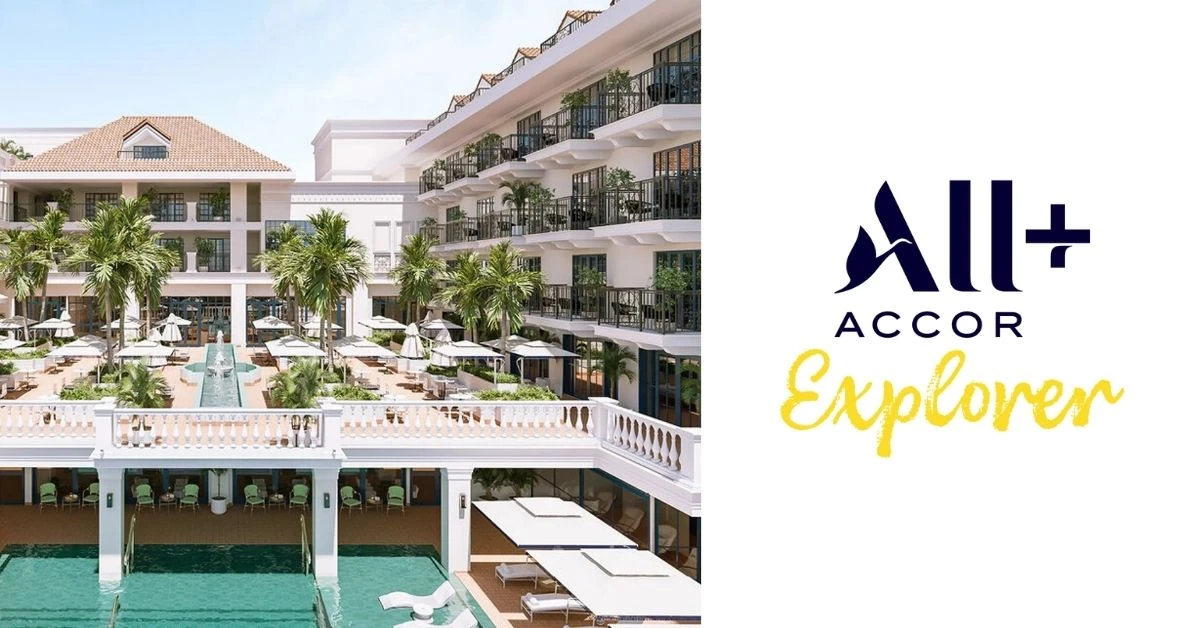
Accor Plus member discount
Home » Accor Plus Explorer vs. Marriott Bonvoy 2026 in Singapore: Why I Bought Accor Immediately but Kept Marriott

Accor Plus Explorer vs. Marriott Bonvoy 2026 in Singapore: Why I Bought Accor Immediately but Kept Marriott

For Singapore-based users, choosing between ALL Accor+ Explorer (formerly Accor Plus) and Marriott Bonvoy often comes down to two core questions: “Do I value immediate, tangible perks for everyday leisure travel?” or “Am I chasing long-term elite status through frequent business trips?” In 2026, both programs have updated key policies—ALL Accor+ Explorer has adjusted member benefits and now directly grants Status Nights, while Marriott Bonvoy has deepened its partnership with Singapore Airlines (KrisFlyer) to enable faster status upgrades. This guide breaks down the 2026 updates, localized advantages, and suitability for different types of travelers, helping you make the most cost-effective choice.

Why I Paid S$288 for Accor but Kept My Marriott Account Free

ALL Accor+ Explorer (formerly Accor Plus) is a paid subscription model. Last year, I spent S$288 on the Singapore version and immediately received 30 Status Nights + Gold status + 2 complimentary night certificates. Marriott Bonvoy is a free accumulation model. I upgrade through business stays and credit card spending.

Here’s the simple conclusion: In practice, if you take more than 10 leisure stays a year, Accor pays for itself; if you travel for business over 30 nights, Marriott offers more value. Don’t look for answers among the wrong crowd.

2026 Core Snapshot: A Table to Understand All Differences

The two business models are completely different. Accor is like a “paid membership store”—pay first, enjoy later. Marriott is like a “points arcade”—play first, upgrade later. Here are the latest 2026 figures:

Singapore

Data doesn't lie. With Accor, S$299 gets you 30 elite-qualifying nights—that's just S$10 per night. Marriott requires a solid 25 nights to reach Gold status. If you want instant elite perks, go with Accor. If you prefer to earn status gradually, Marriott is your pick.

Key Dimension ALL Accor+ Explorer (Singapore) Marriott Bonvoy (Singapore)
Accor ALL Accor+ Explorer Marriott Bonvoy
Entry Cost S$299/year (~¥1,280, incl. tax) Free to join; elite status requires qualifying stays/spend
Instant Benefits 30 elite-qualifying nights (automatic Gold status), 2 Stay Plus complimentary nights in Asia Pacific, up to 15% off room rates, 30% off dining / 15% off beverages (Asia Pacific) Member-exclusive rates, free Wi-Fi, points earning (10 points per S$1 spent)
Elite Tiers Classic → Silver (10 nights) → Gold (30 nights) → Platinum (60 nights) → Diamond (100 nights) Member → Silver (10 nights) → Gold (25 nights) → Platinum (50 nights) → Titanium (75 nights) → Ambassador (100 nights + S$30,000 spend)
Singapore Hotel Coverage ~20 hotels (e.g., Sofitel Singapore City Centre, Pullman Singapore Orchard, Grand Mercure Singapore Roxy, Novotel Singapore on Kitchener) ~35 hotels (e.g., The Ritz-Carlton, Millenia Singapore, W Singapore – Sentosa Cove, JW Marriott Hotel Singapore South Beach, Le Méridien Singapore, Sentosa)
Points Value 1,000 points ≈ ¥80 (fixed redemption value) 1,000 points ≈ ¥55–70 (varies by redemption; can be transferred 1:1 to Singapore Airlines KrisFlyer miles)

The numbers speak for themselves. Accor's S$299 buys 30 elite-qualifying nights at just S$10 per night. Marriott demands 25 actual nights for Gold. If you want top-tier perks right now, choose Accor. If you're in it for the long haul, go with Marriott.

Paid Subscription or Free Accumulation: Which Should You Choose?

There's no one-size-fits-all answer—it all depends on your travel habits.

  • If you're primarily a leisure traveler: You stay at Singapore hotels 2–3 times a year, 3–4 nights each time. Accor ALL Accor+ Explorer's 30 elite-qualifying nights instantly make you a Gold member, unlocking executive lounge access (or free breakfast), late checkout until 4 p.m., and 15% off room rates. The two complimentary Stay Plus nights can be redeemed at Asia Pacific hotels during off-peak periods, worth over ¥1,000. It's a no-brainer investment.
  • If you're a frequent business traveler: You're in Singapore hotels every month. Marriott Bonvoy offers more flexibility. Instead of paying S$229 upfront, you earn status naturally through stays. In 2026, Marriott deepened its partnership with Singapore Airlines, so every flight
  • Singapore Airlines members also earn an extra 25% tier night credit, accelerating status upgrades. Stay 50 nights to unlock Platinum status, with benefits on par with Accor Platinum—and access to even more hotels (35 vs. 20).

💡 Insider tip hotels won’t tell you: Accor’s 30 complimentary nights can be transferred to family or friends, while Marriott’s nights are strictly tied to your personal account. If you have family members who also stay in hotels, Accor’s nights can be “cashed in” as a family perk. Marriott’s nights are for your own use only, but you can fast-track your status by purchasing them (around SGD 56/night)—ideal for business travelers who need elite status in a hurry.

Which has more hotels in Singapore? A real-world stay comparison

Marriott operates 35 hotels in Singapore, spanning every tier from budget-friendly to ultra-luxury. Accor has just 20, but they’re concentrated in prime commercial districts.

Marriott’s edge: A wealth of luxury brands. The Ritz-Carlton, Millenia Singapore (Marina Bay) and W Singapore – Sentosa Cove are iconic destinations. If I redeem Marriott points, an off-peak night costs around 40,000–50,000 points (approx. ¥2,200–2,800 in value), while peak season can jump to 80,000 points.

Accor’s edge: More central locations. Sofitel Singapore City Centre (Bugis) and Pullman Singapore Orchard are both steps from MRT stations. Accor’s point redemption is more transparent—1,000 points are always worth SGD 15 (¥80), with no peak or off-peak fluctuations.

I’ve personally stayed at two properties: Accor’s Grand Mercure Singapore Roxy is near the MRT, and with a 30% dining discount, Hainanese chicken rice costs just over SGD 6 (¥35)—incredible value. Marriott’s Le Méridien Singapore, Sentosa boasts striking design, but dining nearby is pricey; a proper meal easily averages SGD 37+ (¥200+) per person. If you’re a foodie, Accor’s discounts are more practical. If design and brand prestige matter more, Marriott shines brighter.

In 2026, Accor has no new hotel openings planned in Singapore, while Marriott will add a Moxy Hotel in Jurong East, further expanding its footprint. If you love exploring new neighborhoods, Marriott offers more choice.

How to calculate point value in 2026? Which is more rewarding: redemption or transfer?

Points are the lifeblood of any loyalty program, and in 2026 the two programs’ strategies are clearly diverging.

Accor points: Fixed value. 1,000 points = SGD 15 (¥80) off your room bill. This means you always know exactly what your points are worth—no risk of devaluation. When redeeming for a free night, simply divide the room rate by 15 to get the points needed. For example, a room at SGD 300 (¥1,600) requires 20,000 points. Simple and straightforward, perfect for those who hate complicated calculations.

Marriott points: Dynamic value. 1,000 points ≈ SGD 10–15 (¥55–70), depending on the hotel category redeemed. A more valuable option is transferring points to airline partners. In 2026, Marriott is deepening its partnership with Singapore Airlines KrisFlyer at a 1:1 transfer ratio, plus a 5,000-mile bonus for every 60,000 points transferred. If I fly Star Alliance frequently, transferring Marriott points to KrisFlyer miles can yield a value of up to SGD 19 (¥100) per 1,000 points—far exceeding direct redemption value.

💡 Insider Secrets Hotels Won't Tell You: Accor's points expiration policy is more forgiving. As long as you have any qualifying activity each year (a stay, dining purchase), your points never expire. Marriott points expire after 24 months of inactivity. If you travel infrequently, Accor points are safer. If you're a frequent business traveler, converting Marriott points to airline miles for a free business class ticket offers higher value.

Specific to Singapore: For a hotel redemption near Marina Bay Sands, Marriott requires 85,000 points (worth approx. S$880 / ¥4,675), while Accor requires 53,000 points (worth approx. S$798 / ¥4,240). Accor has a slight edge here. However, for redeeming a Singapore Airlines business class seat, transferring Marriott points is more advantageous.

2026 Policy Updates: What Changes Will Hit My Wallet?

Both programs have adjusted their policies for 2026, directly impacting my bottom line.

Accor ALL Accor+ Explorer:

  • Simplified subscription tiers: The previous ‘Classic' and ‘Premium' options are gone, unified into a single paid plan to eliminate choice paralysis.
  • Bonus Status Nights increased from 20 to 30. With the Gold status threshold unchanged (30 nights), this effectively grants instant Gold status.

Marriott Bonvoy:

  • Deepened partnership with Singapore Airlines KrisFlyer: Earn an additional 25% Elite Qualifying Nights bonus on every SIA flight (e.g., a single flight counts as 1 night, plus a bonus 0.25 night).
  • Credit card earning adjustment: The Singapore-issued Marriott co-brand card now earns 10 points per S$1 spent, but the annual fee has increased from S$57 / ¥300 to S$85 / ¥450.
  • Introduction of ‘Dynamic Pricing': Free night award redemptions are no longer divided into off-peak and peak seasons. Prices now float entirely based on real-time demand, with potential 30% price surges during peak periods.

These changes make me lean towards Accor as my primary choice for leisure and Marriott as a supplement for business travel. Accor's policies are more transparent, while Marriott is more flexible but complex.

Final Verdict: How I Maximize Both Programs Simultaneously

As a former hotel group marketing manager, my current strategy is “Pay for Accor, get Marriott for free.” Here's the specific playbook:

  1. Purchase Accor ALL Accor+ Explorer annually at the start of the year: Spend US$229 (Hong Kong version) to get 30 Status Nights + Gold status + 2 complimentary night certificates. This guarantees baseline benefits for all my leisure travel throughout the year.
  2. Channel all business travel stays to Marriott: Stay at Marriott portfolio hotels on work trips to accumulate Elite Qualifying Nights and push for Platinum status. Leverage the SIA partnership to accelerate the upgrade process.
  3. Use points separately based on their strength: Use Accor points directly to offset room charges. Hoard Marriott points to transfer to Singapore Airlines KrisFlyer miles for business class redemptions.
  4. Watch for 2026 promotions: Accor typically has card purchase discounts in March and September. Marriott runs “buy one, get one free” points sales during major shopping festivals like 618 and Double 11.

This way, I invest cash in Accor while using my Marriott account effectively for free, getting the best of both worlds. If I had to choose just one, it would depend on my travel patterns.

Frequency: Stay 15+ nights a year, and Accor pays for itself. Stay 30+ nights, and Marriott becomes the better value.

Join Accor ALL Accor+ Explorer now: Check 2026 latest prices and offers

Join Marriott Bonvoy now: Sign up free for exclusive member rates

FAQ: Top 5 Questions from Chinese Travelers

Q1: Which is better for family trips, Accor or Marriott?
A: Accor. The dining discount directly benefits the whole family—a 30% off meal for four can save you over ¥200. Marriott offers no dining discount, and extra beds for children may incur charges.

Q2: Are there major policy changes in 2026? Will my membership expire soon if I join now?
A: The 2026 policies are stable. Accor's complimentary nights are valid for 12 months, while Marriott's are valid for 24 months. Joining now is completely safe.

Q3: Can I transfer points to family members?
A: Accor points can be transferred to accounts within the same household. Marriott points are non-transferable but can be pooled for joint redemptions (same surname required).

Q4: Does Singapore's visa policy affect Chinese citizens?
A: In 2026, Singapore offers a 96-hour visa-free transit for Chinese citizens. If you're just passing through, you can enjoy a short hotel stay. Regular travel still requires a visa application in advance.

Q5: Is it worth signing up for a membership if I'm only staying one night?
A: Yes. Accor members get 15% off room rates—on an ¥800 room, that's a ¥120 saving, nearly covering the membership cost. Marriott members get exclusive rates, typically 5-10% lower than public prices.

Special Reminders from YouXiaobao

  • Payment Methods: Accor's official website supports Alipay and WeChat Pay; Marriott's supports Alipay. For co-branded credit cards, however, using a Singapore-issued card yields more generous rewards.
  • Language Services: All Accor hotels in Singapore have Chinese-speaking staff. Some of Marriott's luxury properties (like The Ritz-Carlton) offer Chinese butler service.
  • Invoicing: Both can issue invoices in English. If you need a Chinese invoice, please specify this at check-in.
  • 2026 Outlook: Singapore is expected to introduce more convenient visa policies for Chinese citizens in 2026, possibly launching an “Electronic Travel Card.” Hotel bookings will likely be even hotter then, so we recommend booking 3 months in advance.
  • Tipping Etiquette: Tipping is not mandatory in Singapore hotels, but it's customary to give ¥5-10 to bellhops and housekeeping staff.

Finally, if I had to recommend just one for leisure travelers, it would be Accor ALL Accor+ Explorer. If I had to recommend just one for business travelers, it would be Marriott Bonvoy.

。Don’t let complicated choices disrupt your travel mood.

📖 More Marriott Bonvoy Guides

📩 Never Miss a Hotel Deal

One email per week: elite status changes + verified promo codes

No spam. Unsubscribe anytime.

Similar Posts